

“Vyshyvanka: The Visual DNA of Ukrainian Embroidery,” by Alla Rogers
Ukraine House
By Alla Rogers, Diplomatic Watch, June 11, 2026
Dear Readers,
It is my great pleasure to have a voice on Diplomatic Watch and share with you, topics of interest in the art and cultural information space and other subjects of interest addressing a deeper understanding of our shared humanity in all spheres of life across our planet.
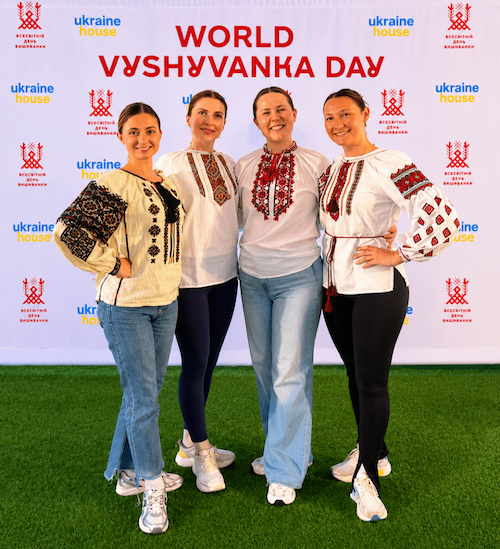
Last week I attended two important events focusing on Ukraine. The first, presented by Ukraine House, a cultural hub for all things Ukrainian and programatically, working closely with the Embassy of Ukraine. The Chairman of the Advisory Board, Ambassador to the United States (2021-2025) Oksana Markarova and presently advisor to President Zelensky on Ukrainian reconstruction, introduced the event, World Vyshyvanka Day. It is THE global celebration of one of Ukraine’s national high folk art crafts, “Vyshyvanka” or embroidered cloth, whose origins go back to pre-Christian pagan times.
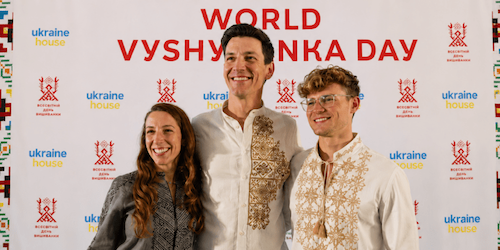 Founded 20 years ago by Lesia Voroniuk, a university student in Ukraine, as a cultural expression of her own national identity, solidarity and pride of culture, she invited fellow students to join her. It was an uncommon act at the time due to prior Soviet persecution. Soon faculty joined in, then other universities. She then boldly appealed to the Ukrainian parliament and in 2015 it became a national holiday. Now, on the third Thursday of May, over 120 countries celebrate and recognize the Vyshyvanka as a cultural treasure. Soon UNESCO may included it in its official recognition of Vyshyvanka as an intangible national cultural heritage treasure.
One might ask what is unique and special about Ukraine’s embroidery? It is so many things but in short, it is a visual statement carrying the DNA of Ukrainian identity itself.
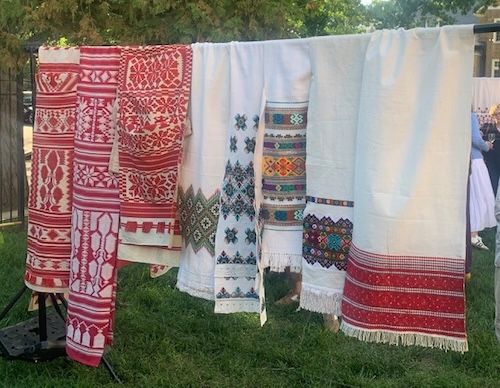 It is part of a rich agrarian tradition in which hemp cloth or linen cloth was woven, thread was made and dyed with vegetable pigments, and embroidery patterns were extracted from ancient pagan symbols as well as flora and fauna from Ukraine’s own land and regions. Every household produced embroidered clothing and passed it down through generations. Embroidered clothing was worn to church, and it literally accompanied one through all life passages: birth, death, baptism, marriage. The household icons were draped in embroidered cloth, and special ceremonial meals were decorated with hand-embroidered tablecloths and table runners.
Today, in the era since Ukraine’s independence, it is an especially joyful form of individual and community celebration of national pride and identity.
In the Soviet Era, it was dangerous to wear embroidered clothing for that very reason, and Soviet terror campaigns against Ukrainian nationalism or anything considered national chauvinism were part of a policy that wanted to obliterate the very notion of Ukraine as a national identity. Many brave artists, intellectuals, and resistance fighters served 15-year sentences in cruel Gulag conditions for daring to wear the Vyshyvanka in public. I know of no other instance of such reprisals in other nations.
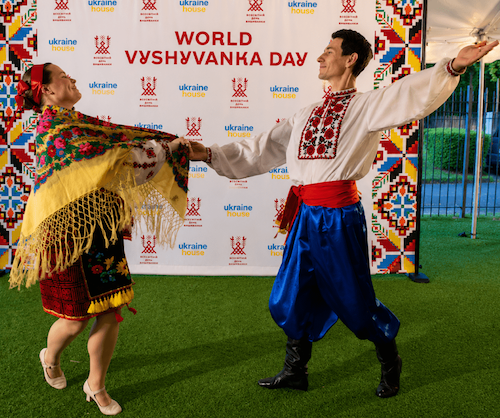 On today’s front lines, while defending nationhood and sovereignty from Russian full-scale assault, Ukrainian men and women wear Vyshyvanka under their battle gear and as an affirmation of who they are and what they are fighting for. It is a wearable invocation for protection of that sacred identity even beyond the threat of death itself.
Alla Rogers is a Contributor and Columnist for Diplomatic Watch, where she writes on culture, diplomacy, identity, and international engagement. Based in Washington, D.C., she is Director of Art and Cultural Impact Programs for the Global Peace Education Network and founder of the Alla Rogers Gallery. Her work has focused on cultural diplomacy, international exchanges, and the role of the arts in promoting dialogue and mutual understanding across borders.