

An America the World Rarely Sees: “Adam’s Fire,” a Film — By Alla Rogers, Diplomatic Watch
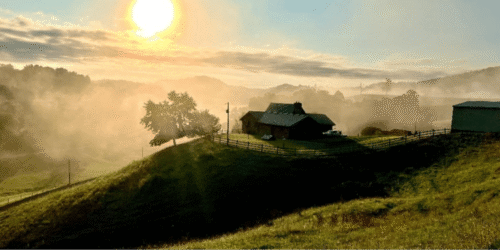
Adam’s Fire
By Alla Rogers, August 14, 2026
As a contributor to Diplomatic Watch Magazine, I am on the lookout for insights into our ‘Shared Humanity’. Washington, D.C., is both our nation’s capital and one of the most important cities in the world in the daily news cycle. All diplomatic posts and local and international news services are based here. Its local population is diverse, representing a multitude of races, ethnicities and cultures. As I move through the art and culture information landscape of Washington, D.C., I look at how we are different and how we are the same. Seeing through the lens of our shared humanity often reveals vast spaces and room for hope and celebration that the academic or political view simply doesn’t aim to provide.
Various art platforms can serve as vehicles not only for creativity for its own sake, but to build bridges and communities that celebrate what all humankind holds sacred: love, kindness, empathy, generosity, forgiveness, humility, service to one another. This is the aspiration: to live in peace and dignity with one another on this Earth.
On location in West Virginia
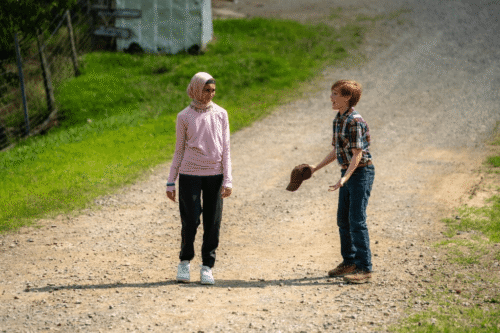
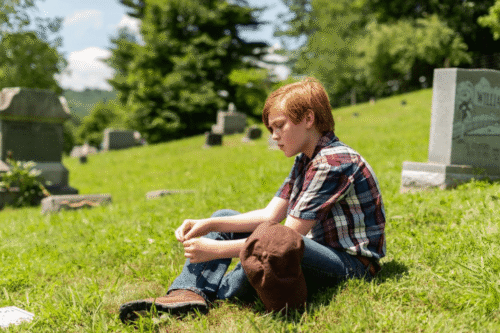
At a time when questions about what it means to be American and what America represents to the rest of the world have taken on renewed importance, Adam’s Fire offers a deeply human perspective on both. Set in the mountains of West Virginia, the film brings together a Christian family rooted in rural America, military veterans carrying the lasting consequences of war, and a Muslim American teenager whose friendship with a grieving young boy crosses boundaries of culture and experience.
Rather than approaching American identity through politics, Adam’s Fire explores it through the lives of ordinary people: their faith, families, friendships, suffering, and capacity for forgiveness. In doing so, the film presents to international audiences an America that is rarely captured in headlines: culturally diverse, spiritually alive, sometimes imperfect, yet capable of extraordinary compassion. Adam’s Fire opens in select theaters across the Washington, D.C., area in October. I caught up with writer and director Bob Ahmed to learn more about the film.
 Much of the world encounters our country through politics, foreign policy, and news headlines. What America did you want audiences to see through this film?
My team and I wanted to show an America where kindness, faith, dignity, and generosity are still deeply rooted in ordinary communities — the America many of us grew up admiring.
When I first entered West Virginia, I pulled my car over to the side of the road because I was trying to figure out which direction to go. Within minutes, an SUV or truck would stop beside me: “Can we help you? Do you need anything?” And then another would stop. There was nothing transactional about it. People were simply helping a stranger because kindness seemed ingrained in the culture. I have traveled to many parts of the world, and in very few places have I encountered that kind of instinctive generosity. And then we found the farm where we eventually filmed Adam’s Fire. Its owner extended a level of hospitality to our cast and crew that we could hardly believe. We wanted to capture not only the beauty of West Virginia, but also the dignity and humanity of its people.
 Christian faith plays an important role in Adam’s Fire. What drew you personally to exploring Christian values through the film?
I feel that Christianity today is often discussed through the lens of politics, but my own relationship with Christian values began somewhere very different. Both of my parents studied at Catholic schools in Pakistan, and they would often speak about what they learned there: kindness, discipline, compassion, and service to others. Through them, I grew up with a deep admiration for Christian values and the good they can inspire in people and communities.
At the heart of the film is perhaps one of the most profound Christian teachings of all: forgiveness. And in real-life examples, one of the biggest tests of faith and character comes when we are asked to forgive the unforgivable.
Why was it important to have several U.S. military veterans participate in Adam’s Fire?
In every single aspect of the film, our number one priority was always authenticity. Several characters in the film are military veterans, so we felt it was important to have real-life U.S. military veterans both in front of and behind the camera. Their experiences and perspectives helped us bring authenticity to the story that we could not have achieved otherwise.
The film also gives an important role to Mariam, a young Muslim American. What inspired her character?
Bob A: My mother is from the northern valleys of Pakistan, a region often referred to as “the Switzerland of the East” for its beauty. During one of my visits there, I saw a young girl training at a taekwondo academy who was competing at the world-championship level. She was the epitome of strength — physically, certainly, but even more strikingly in her character, her humility, her humor, and the quiet confidence with which she interacted with the world around her. The academy’s central philosophy was that martial arts was about finding peace within oneself, not about fighting. Our team wanted Mariam to have that same sense of strength—a young Muslim woman who is comfortable in her faith and grounded by an inner sense of peace.
In conclusion, I hope all our readers will find something of value and insight into being part of a greater human family. A beautiful poem can move us to tears, an inspired painting can remain emblazoned in memory for a lifetime, a magnificent piece of music can be an offering to the divine, and a story well told and understood, when shared, can move hearts, build community, and be a portal through which goodness flows into our world. Thank you for a story well told.
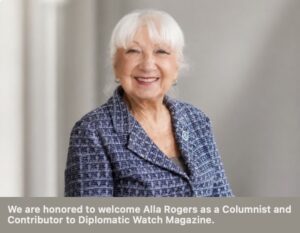
Alla Rogers, Diplomatic Watch
About Alla Rogers, Contributor and Columnist for Diplomatic Watch: Alla writes on culture, diplomacy, identity, and international engagement. Based in Washington, D.C., she is Director of Art and Cultural Impact Programs for the Global Peace Education Network and founder of the Alla Rogers Gallery. Her work has focused on cultural diplomacy, international exchanges, and the role of the arts in promoting dialogue and mutual understanding across borders. Learn more here: diplomaticwatch.com